 Marina
Seafarers deserve better care.
When someone falls ill at sea, the medical officer decides what happens next.
Marina interviews the patient in their own language, guides your officer through the examination and writes the medical report as it happens: complete, and in the TMAS form the doctor ashore expects.
For ship operators, crew managers and P&I clubs
Get the app on your phone

CE-marked
EU MDR
GDPR
EU data processing

Developed with SDU
University of Southern Denmark
MarinaMedical Assessment InterfaceSupported by


Marina in a nutshell.
03:00. A crew member is ill. One officer has to get it right.
The person called to the ship’s hospital is the designated medical officer: a deck officer with a medical certificate, doing this on top of a watch. For advice they call a doctor ashore at a Telemedical Assistance Service (TMAS). That doctor cannot see, touch or examine the patient. Everything they know is what the officer tells them and writes down.
The patient and the officer often share no language.
Sixty nationalities in one fleet is ordinary. Symptoms passed through two or three languages lose the detail that decides the case.
Training fades between refreshers.
Two weeks of training, then years with few real cases. Capable officers, but not clinicians, and it is three in the morning.
The doctor ashore is working blind.
An incomplete report has to be chased, question by question. Some doctors will not advise until the form has arrived.
The scale
178
urgent disembarkations
101
medical evacuations
Danish-flag vessels, 2025
When the doctor cannot see clearly, the safe decision is to take the patient off the ship.
A diversion or an evacuation costs schedule, fuel, port and agency fees, and a seafarer’s time away from the ship. Some are unavoidable. Others follow from a report that left out what mattered.
Cost calculator
What would one avoided evacuation save your fleet?
Most operators find Marina pays for itself after a single incident. Adjust the numbers for your fleet to see the potential.
Potential annual savings with Marina
€225,000
€900,000
Current annual evacuation spend
1.5
Evacuations avoided per year
Illustrative estimate based on your inputs, not a guarantee.
Learn Marina in a minute.
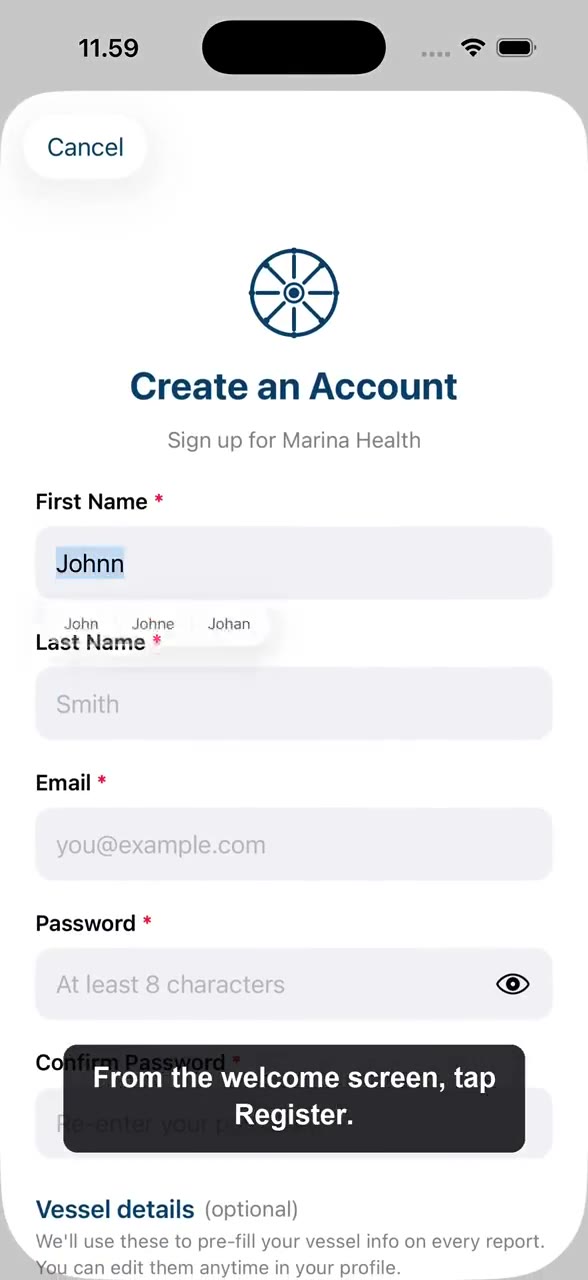
Getting started: register, verify and activate
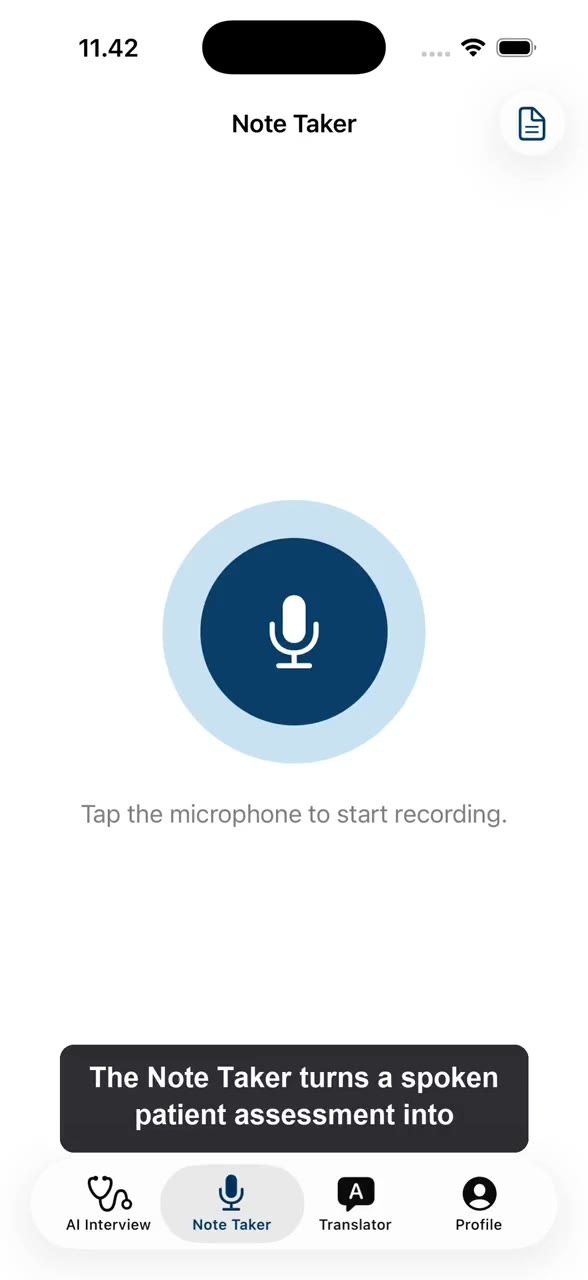
Note Taker: turn a spoken assessment into a report
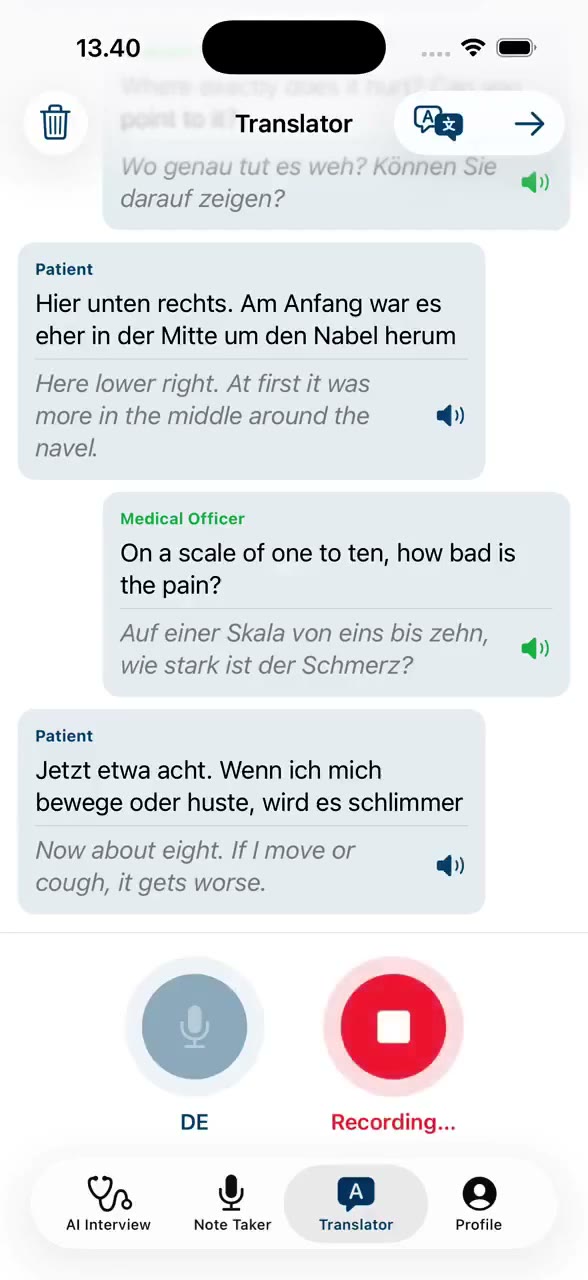
Translator: take a medical history in any language
Your officer examines. Marina writes.
Think of Marina as the colleague who never forgets a question. It asks the patient everything the medical guide asks for, in their own language, prompts the officer with the examinations the guide lists for the complaint, and fills in the report while the examination happens. It does not replace the doctor ashore: the officer stays in charge, and TMAS advises as before.
Press the microphone to start.
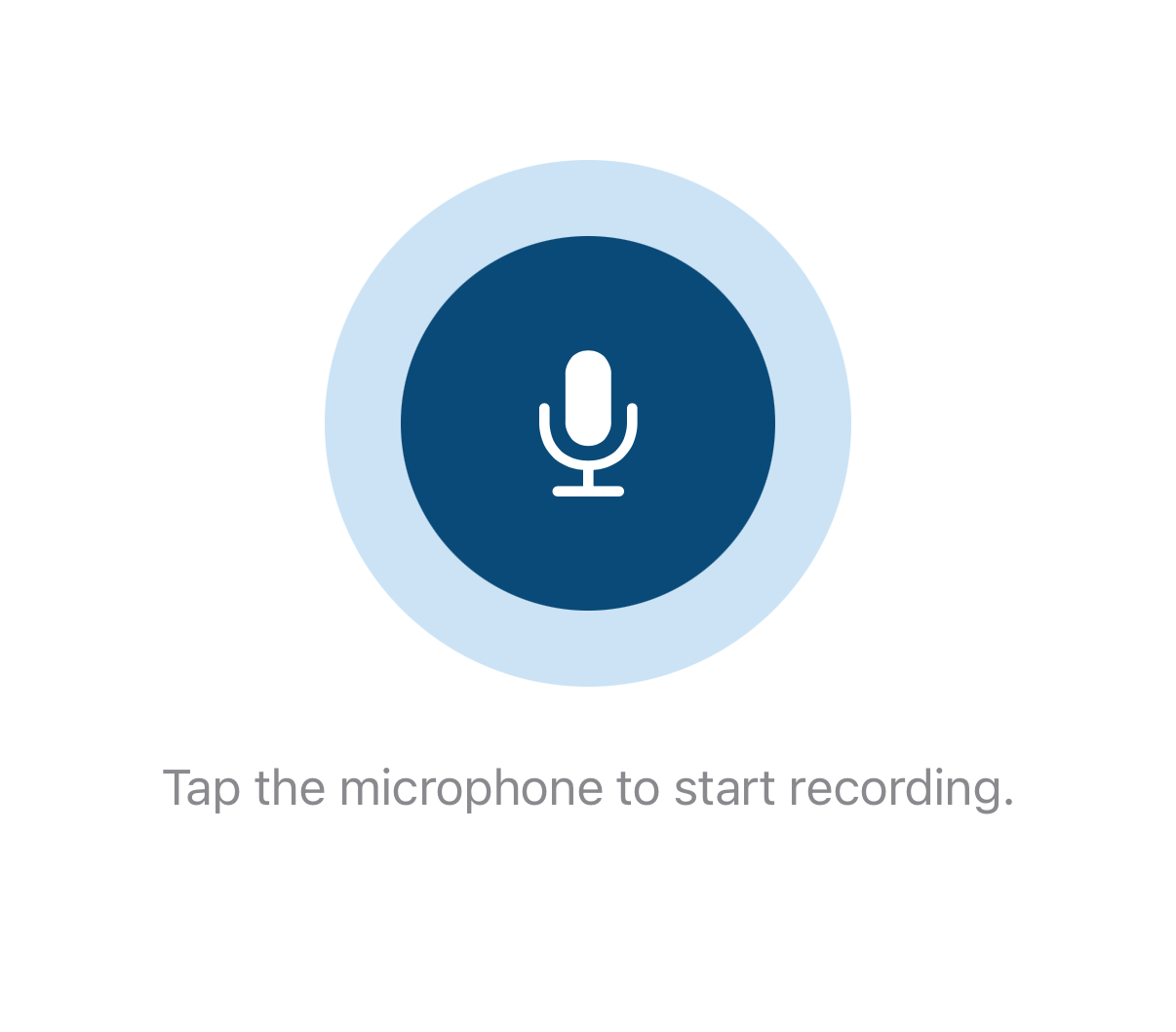
Talk to the patient. Marina drafts the report as you go.
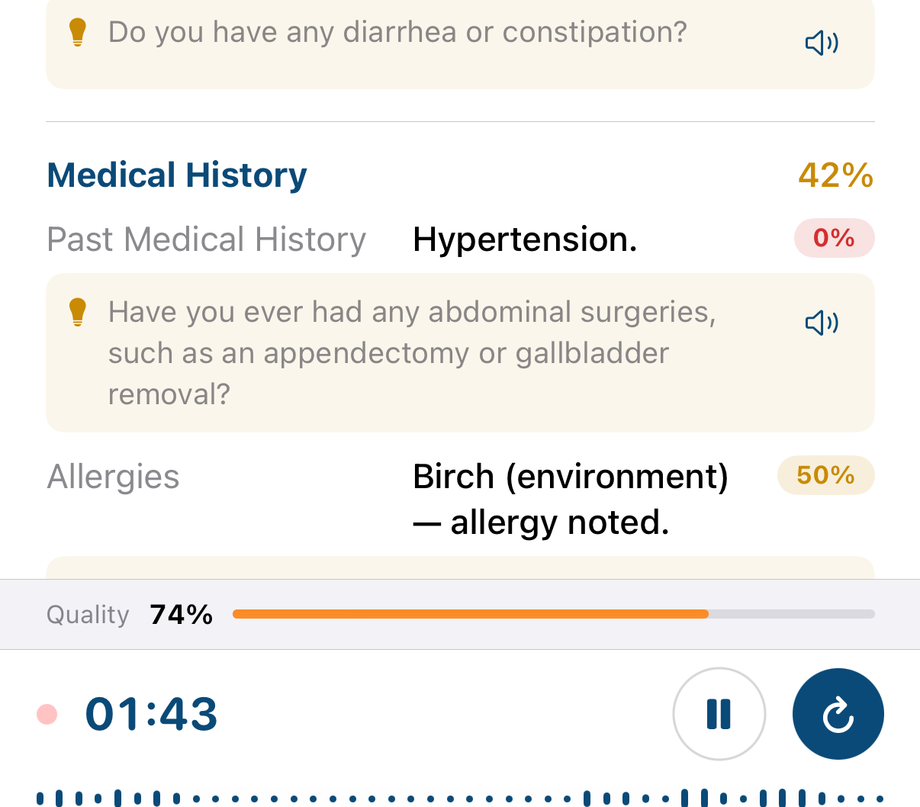
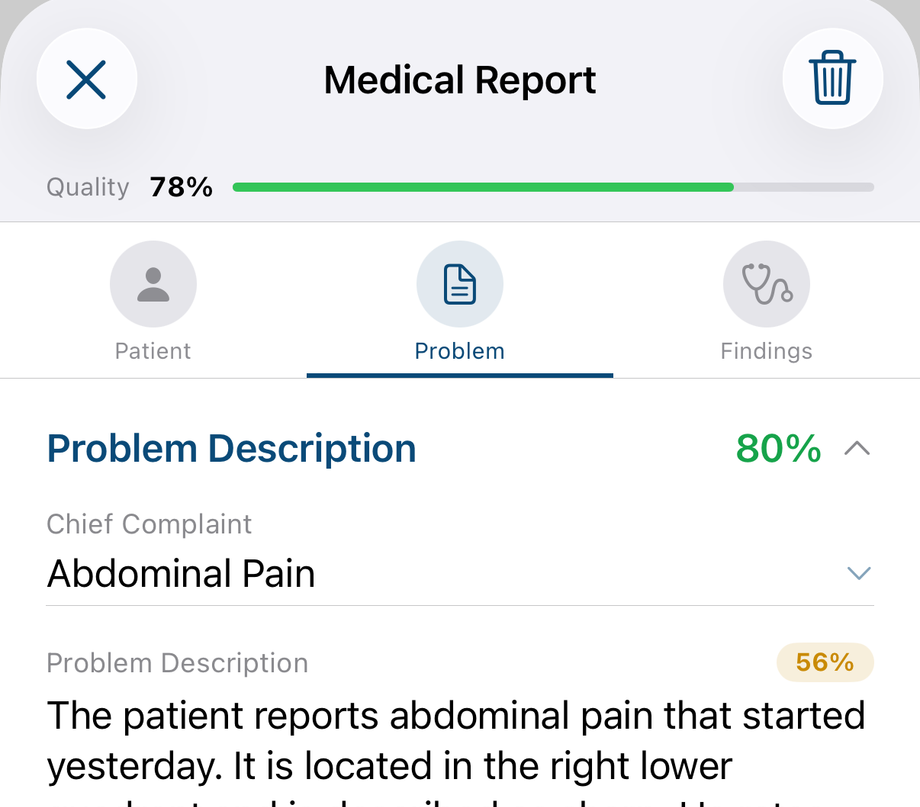
Check and correct any field, by hand or by voice.
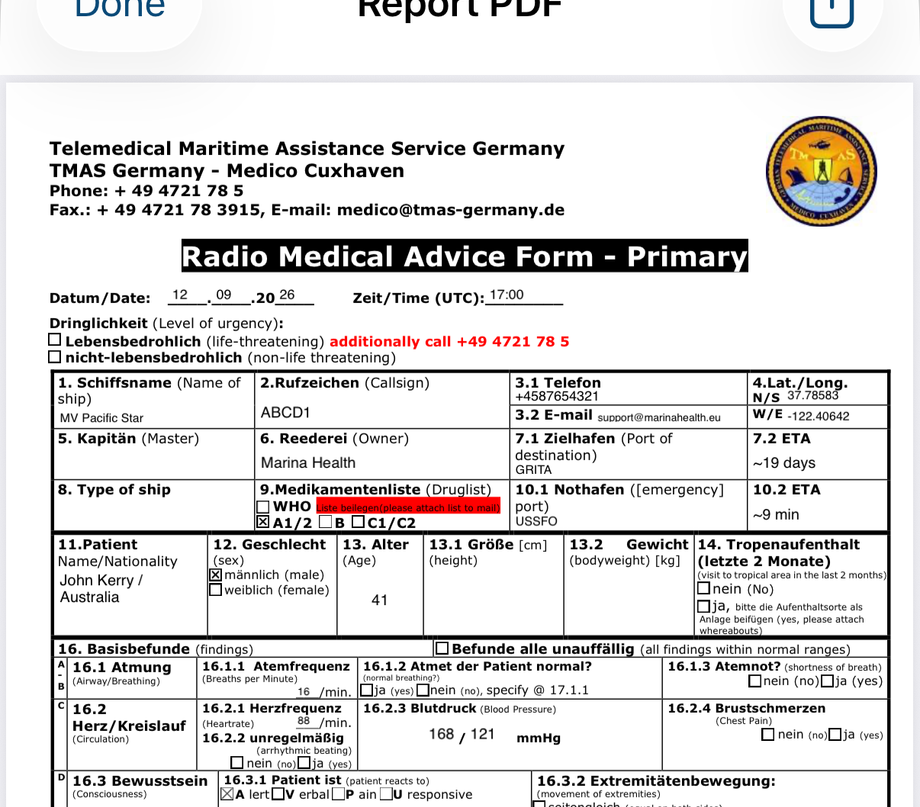
Send it in the proper TMAS format.
Three gaps, closed in one conversation.
Language
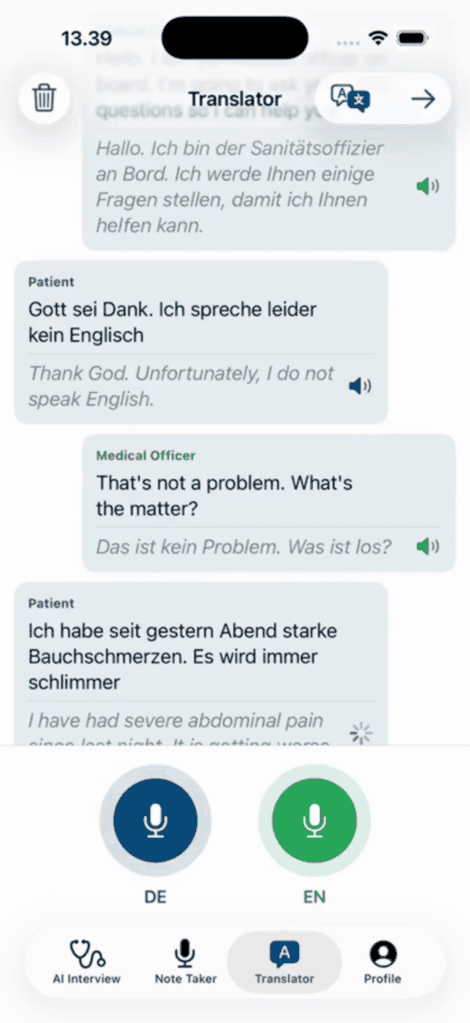
The patient speaks in their own language.
Live two-way translation in 33 languages. Every line is kept in both languages, with the audio, so what reaches TMAS is the symptom itself, not a second-hand summary.
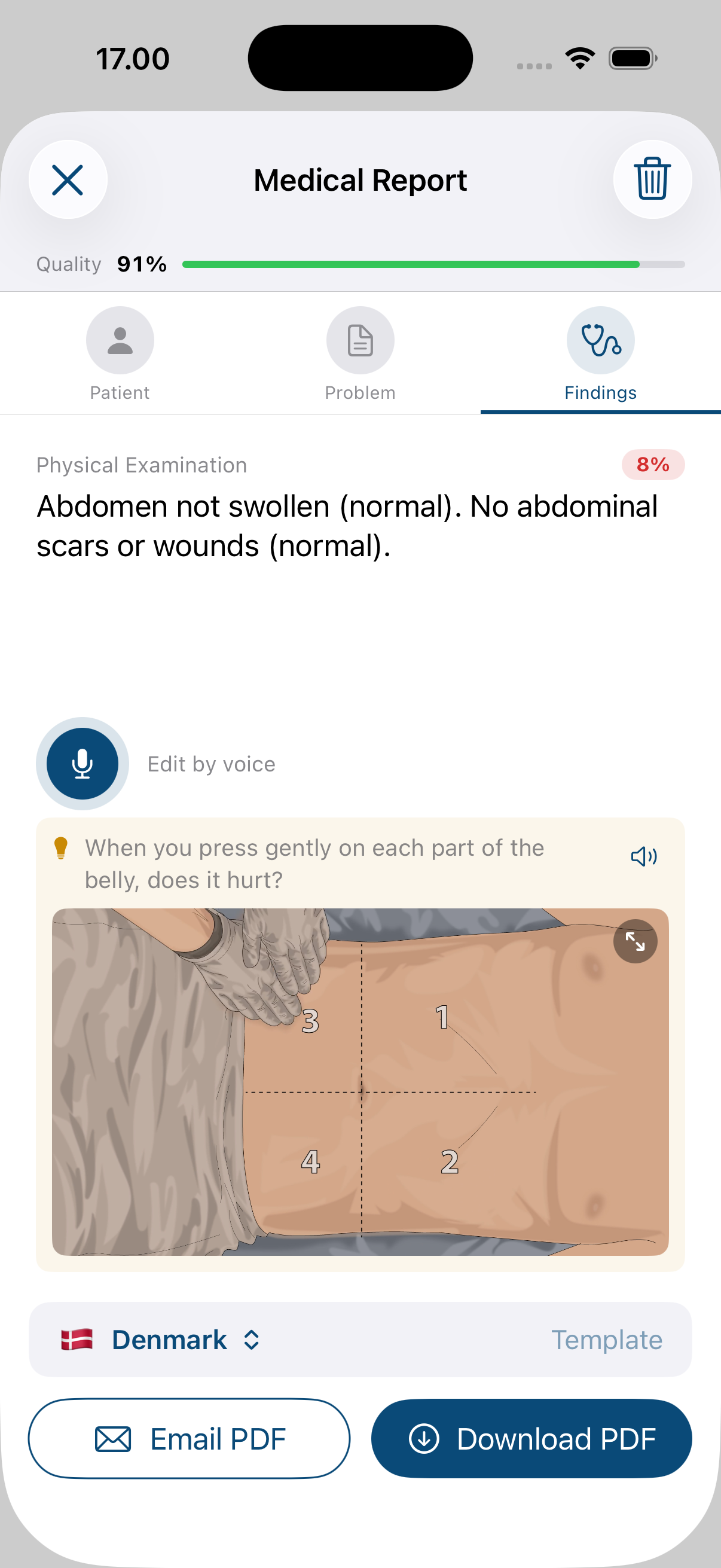
Examination
The officer is guided, step by step.
Marina shows what is still missing, suggests the next question and shows how to examine. From the vital signs it calculates the Maritime Early Warning Score, so the officer knows when to call urgently.
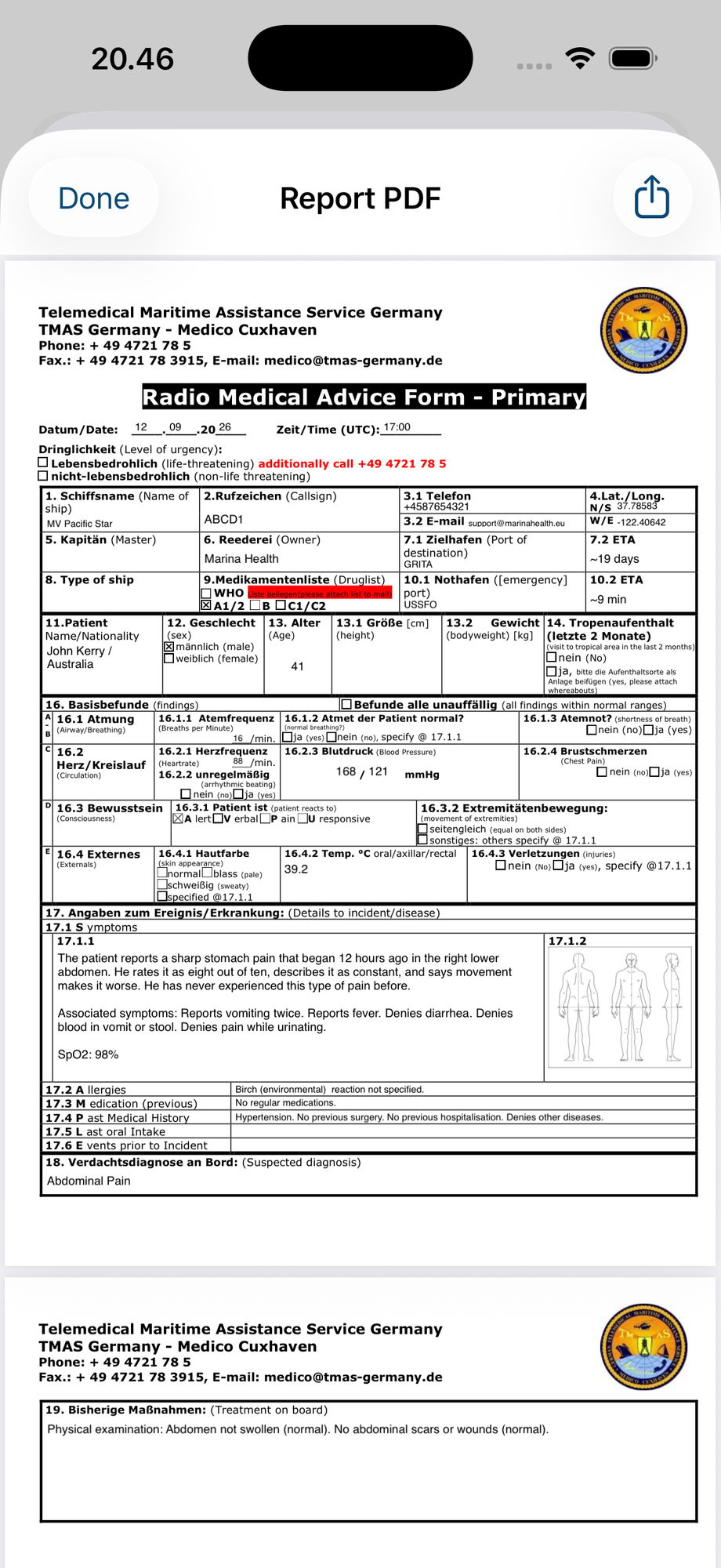
Report
The doctor gets a complete report, first time.
The conversation becomes the report, in the flag state’s own TMAS form, ready to send as a PDF. A complete report is read once and answered once.
Know your crew’s health before you sail.
The same voice interview works at sign-on. Each seafarer is interviewed in their own language, and Marina turns the answers into a consistent health record and risk assessment for the ship.
Marina medical assessment
Hi, my name is Marina. Welcome on board the Novasol. What is your name?
Hi Marina. My name is Jon Maastricht.
JNice to meet you, Jon. Do you use any medications regularly?
Yes, I take amlodipine 5 mg daily, and also some herbal tea from China.
JVoice-first, hands-free
Spoken questions in 33 languages. No forms to type.
Conditions and medication
Chronic conditions and regular medication, for everyone on board.
Since the last medical
What has happened since the last medical examination.
For the ship
When someone falls ill, the officer already knows their history and their medication.
For the owner and the P&I club
Pre-existing conditions are on record in the seafarer’s own words, from the day they signed on, and long before any claim.
Afterwards, what counts is what was written down.
A familiar case
A crew member from Russia is treated for stomach pain. After the voyage, he is admitted for a heart attack. The patient claims that he described pain in his chest to the medical officer. Who is right? Without a record of what was actually said, it is one account against another, and the officer who did everything right is in the same position as one who did not.
What Marina leaves on record
Word-for-word transcript
What was actually said, in both languages. Not recalled months later.
The medical report
The TMAS form the doctor ashore advised on, time-stamped.
A timeline of the case
What was asked, measured and done, and how it ended.
Sign-on health record
Pre-existing conditions, in the seafarer’s own words.
For P&I clubs and insurers
A record made at the time supports faster, fairer handling of crew and passenger claims, and gives the officer who did the right thing a way to show it.
Processed and stored in the European Union under GDPR, with a data processing agreement you sign.
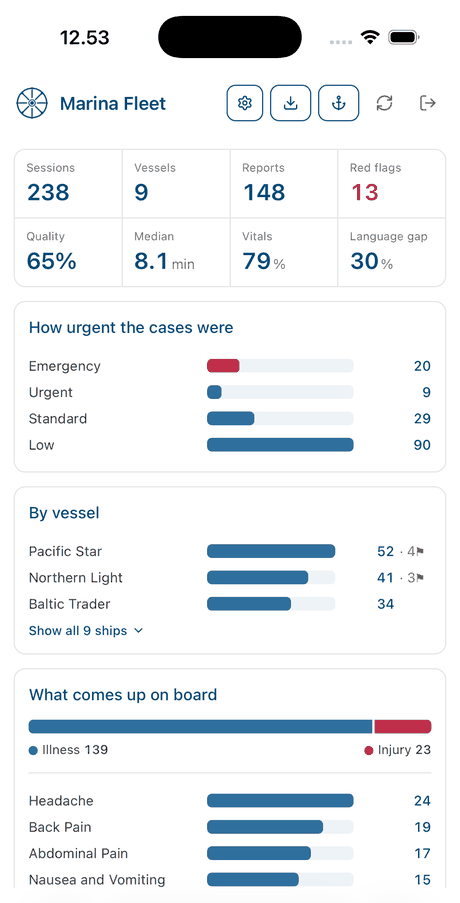
Medical cases, as visible as every other incident.
You already follow machinery and cargo incidents across the fleet. Marina gives illness and injury the same visibility, aggregated and de-identified:
Management
Which ships have open cases, how urgent they were and how long they took.
Designated person ashore
Every case reported to the company as it happens. An ISM 9.1 procedure that runs itself instead of sitting in a binder.
HSEQ
Patterns by vessel and by complaint: the evidence base for prevention and for investigations.
Built to be trusted
CE-marked medical device
Under the EU Medical Device Regulation.
GDPR-compliant
Health data handled for the maritime setting.
Developed in Denmark
All processing in the EU.
Trusted by Maritime Professionals
"Marina gives us a standardised way to handle medical situations on board. It's the kind of tool the industry has needed for years."
Captain
Support vessel, North Sea
"Early identification of a critical case among crew avoided a costly emergency evacuation. The structured assessment made the difference."
Fleet manager
Global shipping company
"Marina has real potential to improve maritime healthcare. The multilingual assistant and red-flag alerts to contact a physician are especially valuable."
General Manager
Leading TMAS Provider
"Marina addresses real needs at sea. Its standardised assessment meaningfully improves the care and safety we can offer acutely sick seafarers on board."
Captain of Support Vessel
25+ years of experience
"Spotting critical illness early cuts diversions and evacuations. Marina's structured assessment helps medical officers decide well when professional support is miles away."
Corporate Medical Doctor
Top 5 Worldwide Shipping Company
Our Team
Peter Biesenbach, MD
Associate Professor and Head of Research at the Emergency Department, University Hospital of Southern Denmark. Emergency and Maritime physician with extensive background in Critical Care and Tele-Emergency Medicine.
Adrian Radomski, PhD
Postdoc at Health Informatics and Technology, Mærsk McKinney Møller Institute, University of Southern Denmark. Specializes in AI applications for healthcare with focus on machine learning solutions for medical decision support systems.